

The Workflow
An illustrative business process. The steps and responsibilities are adapted to the actual organization and engagement.
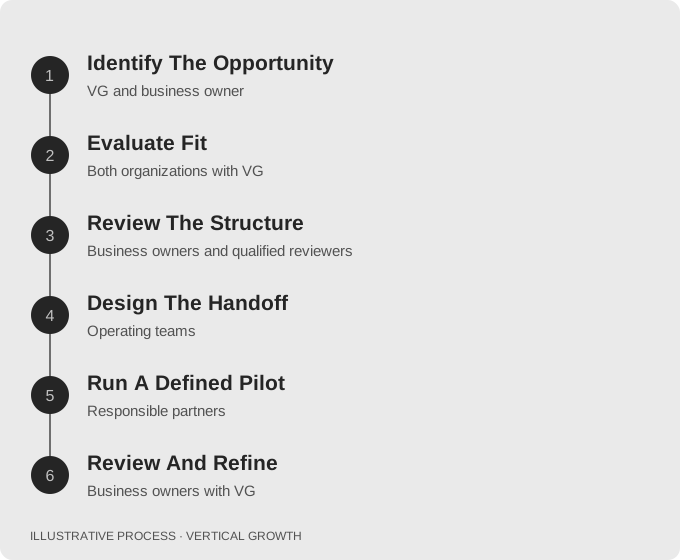
Identify The Opportunity
Define the audience, complementary capability, or commercial need.
Responsibility: VG and business owner
Evaluate Fit
Assess incentives, capacity, reputation evidence, and dependencies.
Responsibility: Both organizations with VG
Review The Structure
Evaluate proposed terms, professional requirements, and permissions.
Responsibility: Business owners and qualified reviewers
Design The Handoff
Specify information, ownership, acceptance, and exceptions.
Responsibility: Operating teams
Run A Defined Pilot
Test the arrangement within the agreed scope.
Responsibility: Responsible partners
Review And Refine
Compare useful outcomes, operating effort, and unresolved risks.
Responsibility: Business owners with VG
Be Clear About What Each Party Contributes
One organization may provide access to an audience while another provides delivery capacity or specialist capability. A relationship becomes difficult when those contributions are assumed rather than agreed. VG can help clarify the commercial rationale and the operating responsibilities.
Review Before Launching
Compensation, referrals, advertising, licensing, data sharing, and contact permissions can create specific obligations. Qualified review should address the actual arrangement and relevant jurisdictions. Calling a payment a marketing fee or an introduction a partnership does not settle those questions.
Define Success And A Sensible Exit
Agree what will be measured, how disputes are handled, and how the relationship can change or end. A pilot should teach both parties whether the arrangement works in practice. This conceptual process does not represent an approved referral arrangement or a guaranteed commercial outcome.