

Start With Operational Questions
Which opportunities need a response? Where is follow-up overdue? Which sources create relevant inquiries? What is awaiting professional review? These questions define the information a pipeline needs more clearly than a long list of possible dashboard widgets.
Make Status And Ownership Reliable
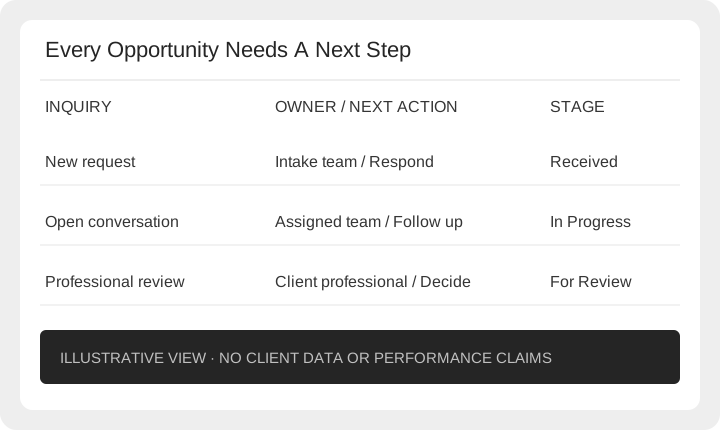
A record should have a meaningful stage, an owner or queue, a next action where appropriate, and relevant dates. Stage changes need consistent definitions. If staff use the same label to mean several different things, the report can look precise while being unreliable.
Separate Work Queues From Management Reporting
A work queue helps someone act today. A management view helps explain patterns over time. Mixing them can produce a crowded screen that serves neither purpose. VG can help design both, using the same underlying definitions while tailoring the presentation to the decision.
Show Uncertainty And Exceptions
Missing source attribution, duplicate records, delayed outcome updates, and inconsistent costs should be visible. A useful dashboard acknowledges those limits. Review its measures with the people entering the data and the owner using the result before treating it as a basis for spending or staffing changes.